
Identifying Key Biodiversity Areas Based on Distinct Genetic Diversity
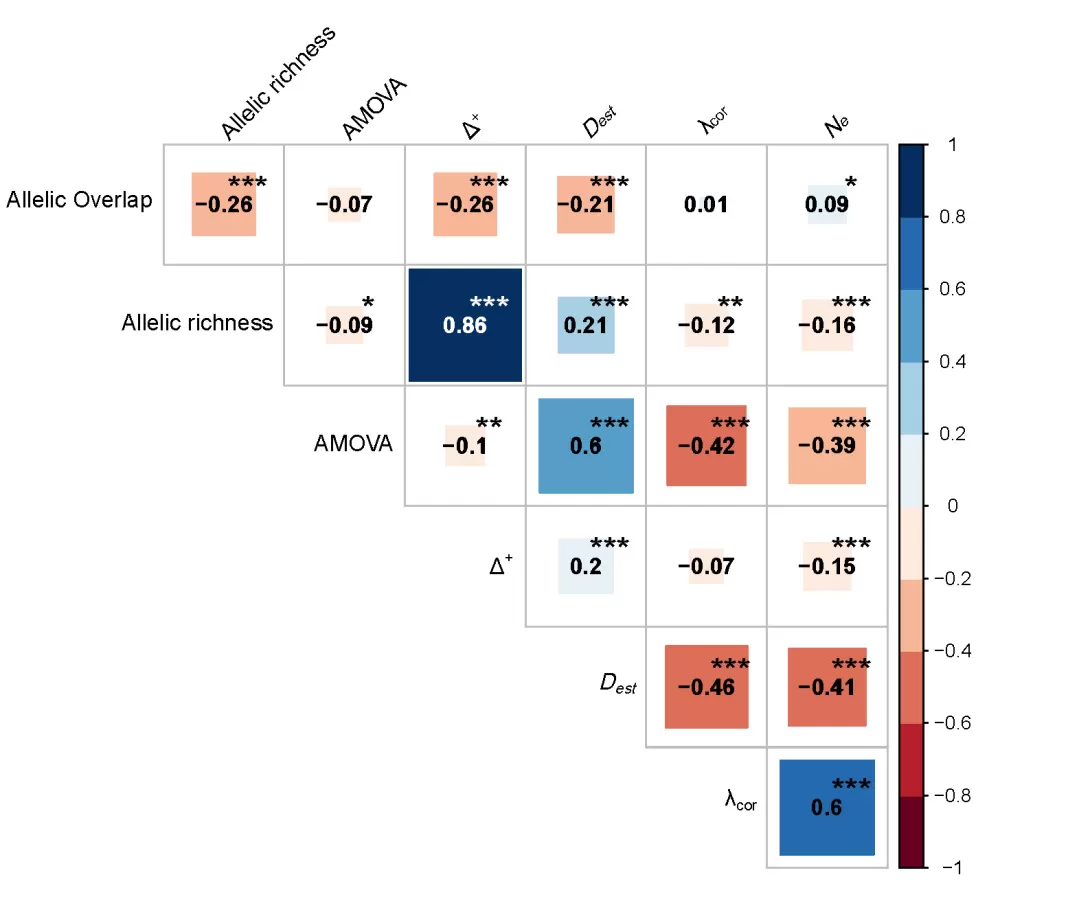
A new study led by Sarah Gronefeld and authored by Axel Hochkirch was published in Molecular Ecology Resources, which tested the suitability of six analytical methods for identification of KBAs based upon genetic data: allelic overlap, Analyses of Molecular Variance (AMOVA), average taxonomic distinctness (AvTD, D+), effective population size (Ne), the genetic differentiation index (Dest), and the diversity index Simpson's l. This study concludes that Δ+, a measure that was developed to measure taxonomic distinctness of biotic communities, performs best in the context of KBA identification as it reflects the unique nature of a species' genetic diversity, is based on simple allele frequencies, and can be easily applied and calculated. AMOVA, Ne, allelic overlap, and our modified version of λ were difficult to apply, interpret, or both. Dest is easily applied for measuring genetic distinctiveness but not genetic diversity. For this reason, it may not be suitable for prioritising areas for the long-term protection of the species.
Find out more here https://doi.org/10.1111/1755-0998.70094
Publication:
Gronefeld, S.C., López, H., Schmidt, R. and Hochkirch, A., 2026. Identifying key biodiversity areas based on distinct genetic diversity. Molecular Ecology Resources, 26(2), p.e70094.